When a “meatless rice” evokes the taste of the times
During a trip, I walked into the vegetarian hall of Lingyin Temple in Hangzhou. Between the wooden chairs and stone tables, there was a bowl of mushroom noodles, a plate of vegetarian duck, and a cup of tea. It looked plain, but after the first bite, I unexpectedly stopped. The light yet layered taste was not like the “vegetarian version of meat dishes” we taste in street vegetarian fast food, but more like a kind of wisdom brewed by time.
After that day, I began to wonder: How did this kind of “vegetarian meals” in the temple gradually become the “vegetarian culture” we are familiar with today?
From “abstaining from food” to “nurturing the mind”: the origin of vegetarianism is not just about eating vegetarian food
In traditional Chinese Buddhism, “vegetarianism” is not just a dietary rule for monks to avoid killing, but also a lifestyle closely linked to “spiritual practice”. It emphasizes “abstaining from the five pungent foods” (not eating spicy foods such as onions, garlic, and leeks), and pursues a “pure and undisturbed” mind.
For example, Guangji Temple in Beijing had a vegetarian hall in the Ming and Qing dynasties to provide vegetarian meals for pilgrims. Eating is not just about food, but a “simple and quiet” spiritual practice experience. This dietary philosophy has quietly spread to the outside world over time – from Buddhist temples to the gatherings of literati and poets, and then into the kitchens of princes and nobles.
During the Republic of China period: vegetarian culture first “broke the circle”
After the Republic of China, urban culture gradually emerged, and a group of literati and scholars began to be obsessed with the “realm” of vegetarian food. In that era when material resources were not abundant, vegetarian food became a kind of “aesthetic diet”. Gongdelin Vegetarian Restaurant in Shanghai, founded in 1922, stood out in this cultural atmosphere.
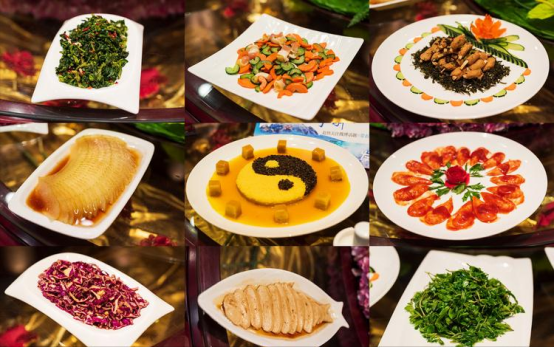
Gongdelin does not simply imitate dishes that look like meat but are not meat, but uses ordinary ingredients such as tofu, shiitake mushrooms and konjac to make dishes that look similar but are magical, such as Kung Pao Chicken and Squirrel Mandarin Fish. It has not only won the favor of people like Lu Xun and Zhang Ailing, but has also gradually broken the public’s prejudice that “vegetarian food equals bitterness”.
Contemporary Return: Finding “Zen Satiety” in the City
Today, vegetarianism is no longer a spiritual practice for a few people, but is becoming an urban health trend. From Amanfayun in Hangzhou, to the vegetarian restaurant of Daci Temple in Chengdu, to Suntory Vegetarian Restaurant in Liwan District of Guangzhou, more and more urban people are willing to take a vegetarian meal out of their fast-paced lives to “take a step back” for their body and mind.
These modern vegetarian restaurants retain the traditional Zen spirit: no noise, no publicity, and pay attention to the beauty of moderation in knife skills, cooking time, and plating. But at the same time, they also add modern nutritional combinations, such as adding quinoa, avocado, mushroom polyphenols and other elements, making “vegetarian” no longer just “less”, but a complete and rich dietary philosophy.
It’s not just a diet, it’s also a lifestyle
The reason why Chinese vegetarian food has gone from the pure land of Buddhism to the public eye is not only the spread of religious beliefs, but also the inspiration of a lifestyle – less is more, stillness is movement.
For me, every time I eat vegetarian food, it is a “slowdown” of my pace of life. You won’t eat it in a hurry, nor will you want to take out your phone to check the screen, but just chew quietly, let your body remember the lightness of this meal, and remember the moment when this era is still willing to slow down.
You may find that real vegetarian food is not a dish without meat, but a kind of satisfaction without burden. And this satisfaction may be the seasoning that is most easily lost in our fast-paced daily life.