Dessert is more than just a conclusion to a meal; it is a cultural artifact, a testament to culinary evolution, and a sophisticated interplay of chemistry and psychology. Across the globe, certain confections have transcended their regional origins to become symbols of indulgence and celebration. Whether it is the labor-intensive precision of Middle Eastern pastry, the modern Italian mastery of coffee and cream, or the ancient Mediterranean tradition of honey-bound nuts, these sweets tell the story of human creativity. In this definitive guide, we dissect the architecture of Baklava, the psychological allure of Tiramisu, and the festive heritage of Christmas Nougat.
The Ottoman Legacy: The Art and History of Baklava
Baklava is often regarded as the crown jewel of Ottoman cuisine, a dessert that demands such high levels of skill that it was historically prepared only by master pastry chefs in the kitchens of the Topkapi Palace. The complexity of Baklava lies not in the number of ingredients, but in the physical manipulation of dough and the precise management of temperature and moisture.
The Mastery of the Phyllo Sheet
The defining characteristic of authentic Baklava is the “phyllo” or “yufka” dough. Traditionally, a true master must be able to roll the dough so thin that a newspaper can be read through it. In the royal kitchens of the Ottoman Empire, a standard tray of Baklava was expected to contain at least 40 layers of this translucent pastry. The stacking process requires each layer to be brushed with clarified butter (ghee), which ensures that the layers remain distinct and crispy rather than merging into a single mass of dough during the baking process.
Regional Variations and Ingredient Profiles
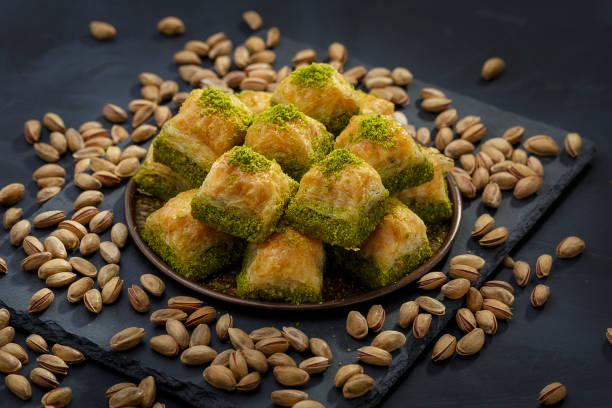
While the core concept remains consistent, regional variations highlight local agricultural strengths. In Gaziantep, Turkey—the undisputed capital of Baklava—the filling is almost exclusively early-harvest pistachios, which provide a vibrant green hue and a delicate aroma. In other regions, particularly throughout the Balkans and Greece, walnuts are the primary filling, often spiced with cinnamon and cloves. The final stage involves pouring a hot sugar syrup or honey-based syrup over the cooled pastry (or vice versa), a technique that requires perfect timing to ensure the pastry absorbs the liquid without losing its structural crunch.
- Gaziantep Style: Uses “emerald” pistachios and thin, hand-rolled sheets.
- Greek Tradition: Often features 33 layers of dough, symbolizing the years of Christ’s life.
- Middle Eastern Variations: May include rosewater or orange blossom water for a floral aromatic profile.

Tiramisu: Decoding the Global Phenomenon
Unlike Baklava, which has centuries of history, Tiramisu is a relatively modern creation, surfacing in the mid-20th century in the Veneto region of Italy. Despite its youth, it has achieved a level of global ubiquity that few other desserts can claim. The secret to its success lies in its name—literally meaning “pick me up”—and its unique psychological profile.
The Perfect Balance: Bitterness Meets Sweetness
Tiramisu is a masterclass in flavor contrast. The bitterness of the strong espresso and the dusting of dark cocoa powder provide a sophisticated counterpoint to the rich, fatty sweetness of the mascarpone cheese and the sugar-laden ladyfingers (savoiardi). This contrast prevents “palate fatigue,” allowing the consumer to enjoy a large portion without feeling overwhelmed by sugar. Psychologically, the combination of caffeine from the coffee and the quick energy from the sugar creates a physiological “lift” that reinforces the desire for the dessert.
Architectural Integrity of Tiramisu
A perfect Tiramisu relies on the texture of the mascarpone cream. This is achieved by folding whipped egg yolks and sugar (often prepared as a zabaglione) into the cheese, and sometimes incorporating whipped egg whites or heavy cream for additional lightness. The ladyfingers must be dipped in coffee just long enough to absorb the flavor but not so long that they lose their structural integrity. The result is a dessert that is simultaneously creamy, spongy, and liquid, providing a complex “mouthfeel” that is highly satisfying to the human brain.

Christmas Nougat: A Seasonal Symphony of Honey and Nuts
Nougat is one of the oldest forms of confectionery, with roots tracing back to ancient Rome and the Middle East. However, it has found its most iconic expression as a staple of the European Christmas season, particularly in Spain (Turrón), Italy (Torrone), and France (Nougat de Montélimar).
The Science of Aeration and Texture
The production of nougat is a feat of food engineering. It is essentially an aerated candy made from honey, sugar, and egg whites. The texture—ranging from “brittle and crunchy” (Turrón Duro) to “soft and chewy” (Turrón Blando)—is determined by the temperature to which the honey and sugar are cooked and the duration of the whipping process. High temperatures result in a hard, glass-like structure, while lower temperatures and higher moisture content produce a fudge-like consistency.
Symbolism and Holiday Tradition
The inclusion of expensive ingredients like honey, toasted almonds, hazelnuts, and pistachios historically made nougat a luxury item reserved for the most important celebrations of the year. During Christmas, nougat represents the “sweetness of the holiday.” In Spain, the tradition of sharing large blocks of Turrón signifies family unity and the sharing of wealth and sweetness for the coming year. The exclusive use of seasonal nuts harvested in the autumn makes it a natural fit for the winter solstice celebrations.

Comparative Analysis of Iconic Confections
To understand why these three desserts dominate the global market, we must look at their technical and sensory differences. While they all provide sweetness, they satisfy different culinary cravings and cultural functions.
| Feature | Baklava | Tiramisu | Christmas Nougat |
|---|---|---|---|
| Primary Texture | Crispy & Flaky | Creamy & Soft | Chewy or Brittle |
| Key Flavor Note | Honey & Nutty | Coffee & Cocoa | Honey & Toasted Nut |
| Difficulty Level | Extremely High (Dough) | Medium (Assembly) | High (Temperature Control) |
| Origin | Ottoman Empire | Italy (Veneto) | Mediterranean/Middle East |
| Shelf Life | Medium (7-10 days) | Short (2-3 days) | Long (Several months) |

The Sensory Appeal: Why We Crave These Sweets
The global popularity of these desserts is not accidental. Food scientists point to the “bliss point”—the specific ratio of salt, sugar, and fat that optimizes brain reward. Baklava hits this through the combination of saturated fat (butter) and concentrated sugar (syrup). Tiramisu achieves it through the high fat content of mascarpone paired with the stimulant properties of caffeine.
The Role of Aromatics
Aromatics play a vital role in the “long-form” enjoyment of these sweets. The use of toasted nuts in both Baklava and Nougat triggers the Maillard reaction, producing complex aromatic compounds that signal “high-energy food” to our ancestors’ brains. In Tiramisu, the volatile aromatic compounds in coffee provide an olfactory complexity that elevates the dessert from a simple sweet to a sophisticated culinary experience.
Cultural Adaptation and Modern Trends
In the modern era, these desserts continue to evolve. We see “Deconstructed Tiramisu” in Michelin-starred restaurants, vegan Baklava using coconut oil instead of butter, and sugar-free Nougat versions. Despite these changes, the fundamental appeal remains rooted in the traditional methods that prioritize high-quality ingredients and meticulous preparation.

Frequently Asked Questions (FAQ)
- Q1: Why is Baklava so difficult to make at home?
- The primary challenge is the phyllo dough. Maintaining the correct moisture level so the sheets don’t crack while keeping them thin enough to be translucent requires professional equipment or decades of manual practice. Additionally, the clarification of butter must be perfect to prevent the pastry from burning or becoming soggy.
- Q2: Can Tiramisu be made without eggs?
- While traditional Tiramisu uses raw egg yolks for richness and whipped whites for fluffiness, modern versions often substitute whipped heavy cream. However, purists argue that the unique “zabaglione” flavor and the specific light-yet-dense texture can only be achieved through the traditional egg-based method.
- Q3: What is the difference between white and brown nougat?
- White nougat (Nougat Blanc) is made with whipped egg whites, resulting in a lighter, airier texture. Brown nougat (Nougat Noir) is made without egg whites, consisting primarily of caramelized sugar and honey, which results in a much harder, darker, and crunchier confection.
- Q4: How should Baklava be stored to keep it crispy?
- Baklava should be stored at room temperature in an airtight container. Refrigeration is actually the enemy of Baklava, as the moisture in the fridge will cause the sugar syrup to crystallize and the pastry layers to become soft and rubbery.
- Q5: Is there caffeine in Tiramisu?
- Yes, because the ladyfingers are soaked in strong espresso, a standard serving of Tiramisu contains a measurable amount of caffeine. While not as much as a full cup of coffee, it is enough to provide a mild stimulating effect, contributing to its “pick me up” reputation.